Reclaiming the Floor Plan
The garage is fundamentally an equipment housing unit. Yet, through poor planning and incremental accumulation, it typically devolves into a horizontal obstacle course. Reclaiming the garage floor plan is the primary objective of any utility storage system. The rule is absolute: nothing sits on the concrete unless it has wheels or weighs more than 200 pounds.
By forcing inventory onto vertical surfaces and overhead structural supports, the garage is restored to its original purpose—protecting vehicles and providing uninhibited workspace.
Overhead Storage Grids
The ceiling is the most underutilized square footage in residential architecture. Overhead ceiling racks offer massive cubic volume for items accessed infrequently, such as holiday decorations, camping gear, and long-term archival boxes.
When installing ceiling racks, structural integrity is paramount. Racks must be bolted directly into ceiling joists using lag screws. The load ratings typically range from 250 lbs to 600 lbs per grid. Never exceed the manufacturer specifications, and ensure weight is distributed evenly across the platform. Clear plastic bins with locking lids are mandatory for overhead storage to prevent pest intrusion and moisture damage.
Wall-Mounted Track and Panel Systems
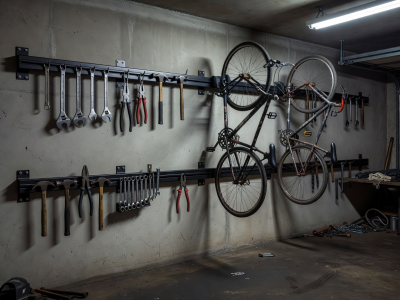
To clear the perimeter, structural wall systems are required. There are three dominant methodologies for vertical wall storage:
| System Type | Best Used For | Pros | Cons |
|---|---|---|---|
| Slatwall Panels | Retail-style continuous utility | Seamless look, highly modular | Expensive, lower point-load limit |
| Steel Track Rails | Heavy, bulky items (bikes, ladders) | High weight capacity, cheap | Limited vertical adjustment |
| Pegboard | Small hand tools, workbenches | Inexpensive, granular control | Low weight tolerance, pegs fall out |
Cabinetry and Chemical Storage
Certain materials cannot be stored in the open due to safety, UV degradation, or temperature sensitivity. Garage cabinetry should be elevated 6 inches off the floor on heavy-duty legs to prevent water damage and allow for easy sweeping. Automotive fluids, paint thinners, fertilizers, and pesticides must be kept in lockable steel cabinets to prevent access by children or pets. Wood and particleboard cabinets warp rapidly in non-climate-controlled environments; welded steel or heavy-duty resin plastics are the only acceptable materials for garage casework.
Structuring a Workbench Zone
If the garage functions as a workshop, the bench requires its own micro-organization system. The workbench surface must remain clear when not actively in use. Implement shadow boards or magnetic tool strips immediately above the work surface for primary hand tools. Fasteners and hardware should be aggressively categorized into clear modular drawer towers—never left in mixed jars.
Environmental Controls
A final consideration for garage systems is the environment. Drastic temperature fluctuations and high humidity rapidly degrade tools, textiles, and cardboard. Transition all cardboard storage to gasket-sealed plastic totes. If storing expensive power tools or sensitive materials, consider installing a localized dehumidifier to preserve the integrity of your equipment over the long term.