Building a Textile Processing Plant
The laundry room should not be viewed as mere storage; it is an active processing facility. Textiles flow in dirty and must flow out clean, dry, and folded. Any bottleneck in this linear process results in piles of laundry accumulating on floors, beds, or chairs. Optimizing the laundry room requires removing physical friction points in the workflow.
Pre-Sorting Infrastructure
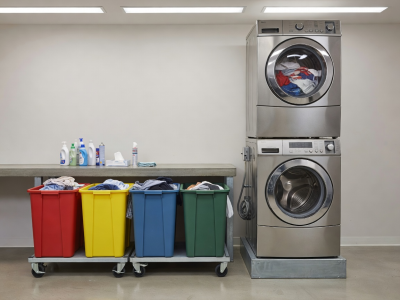
Sorting clothing on the floor immediately prior to washing is inefficient and ergonomically punishing. The system must force sorting at the point of deposit. Utilize a multi-bin hamper system, either integrated into lower cabinetry or implemented as a sturdy rolling cart.
At minimum, separate into three rigid categories: Whites, Darks, and Delicates/Towels. When a bin reaches capacity, it perfectly equates to a single wash load. This removes the guesswork and drastically reduces processing time.
Vertical Drying Solutions
A significant portion of modern wardrobes consists of activewear, delicate knits, or synthetic blends that degrade in high-heat tumble dryers. Flat surfaces in laundry rooms are typically scarce, meaning wet clothes end up draped over doors or chairs. Install dedicated drying infrastructure:
- Wall-Mounted Accordion Racks: These expand when needed and fold completely flat against the wall when idle.
- Ceiling Pulley Racks: Ideal for high-ceiling rooms, allowing wet clothes to be hoisted up where warmer air circulates, freeing up floor space entirely.
- Under-Cabinet Hanging Rods: A simple steel rod mounted beneath upper cabinets allows shirts to go directly onto hangers damp, air-drying wrinkle-free.
Chemical and Detergent Storage
Laundry involves highly concentrated chemicals—bleach, stain removers, heavy detergents, and pods. These present severe poisoning risks if accessible to children or pets.
| Item Category | Storage Requirement | Rationale |
|---|---|---|
| Detergent Pods / Liquids | Upper cabinets, latch-secured | High toxicity, visually appealing to children |
| Stain Pre-treaters | Immediate access shelf near sink | High frequency use requires rapid deployment |
| Bulk Refill Jugs | Floor-level sturdy cabinetry | Too heavy for upper shelves; ergonomic strain |
The Folding Station
If space permits, install a smooth, continuous countertop directly over front-loading machines. This creates an immediate folding zone. The rule of laundry processing is that items must be folded as soon as they exit the dryer. Transporting a basket of crumpled, warm clothes to a bedroom guarantees they will sit unfolded for days. If top-loading machines prohibit a counter, a drop-leaf table bolted to the wall can provide a temporary flat surface.
Maintenance of the Machines
An optimized room requires optimized tools. Leave front-loading washing machine doors ajar when not in use to prevent mold and mildew in the rubber gasket. Empty the dryer lint trap before every single cycle—a full trap extends drying times dramatically and constitutes a severe fire hazard. Routinely check behind machines for escaped socks or lint buildup to maintain a pristine processing environment.